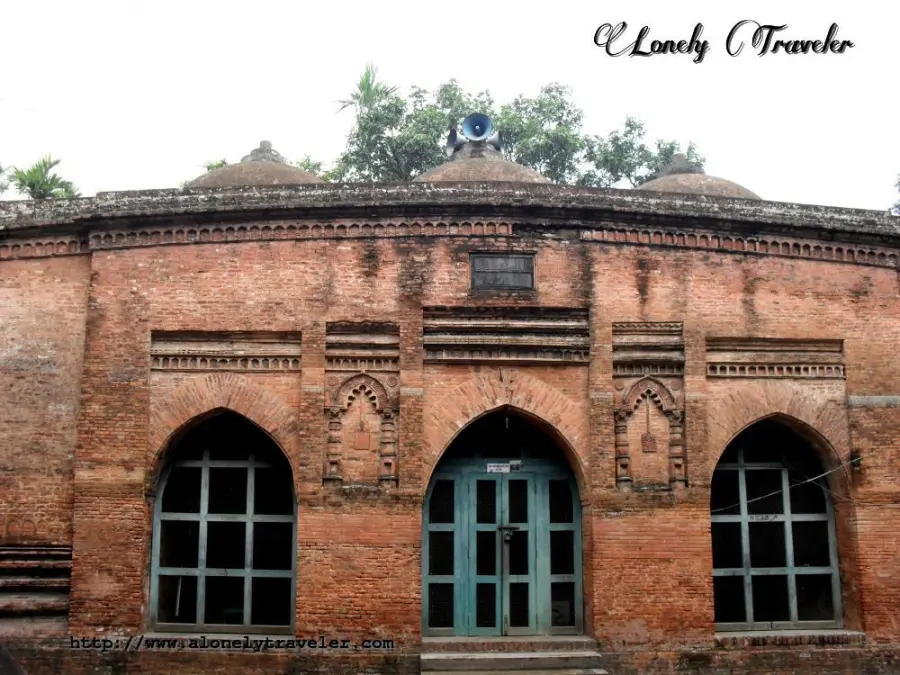
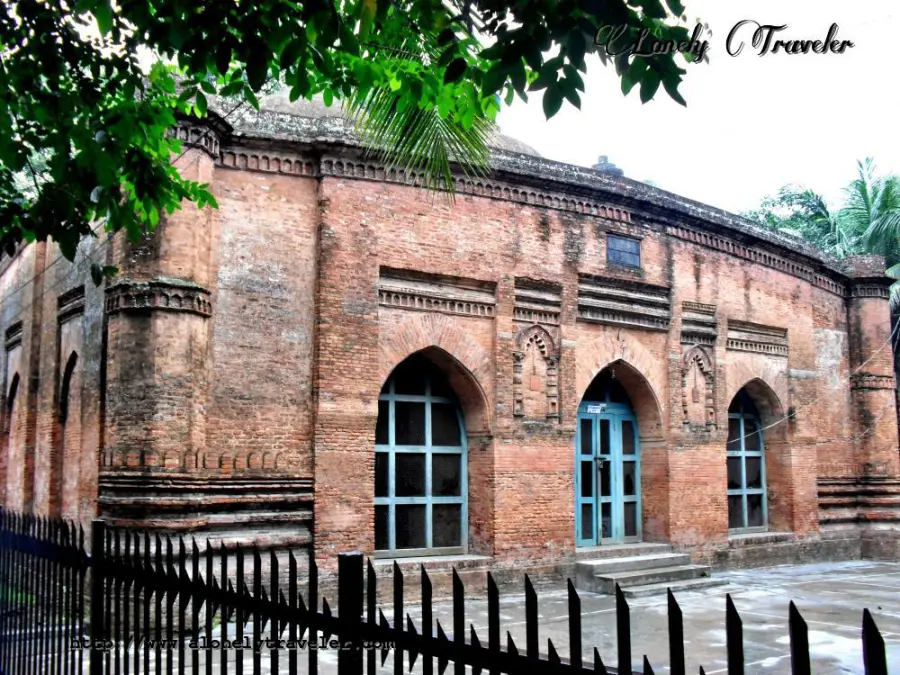
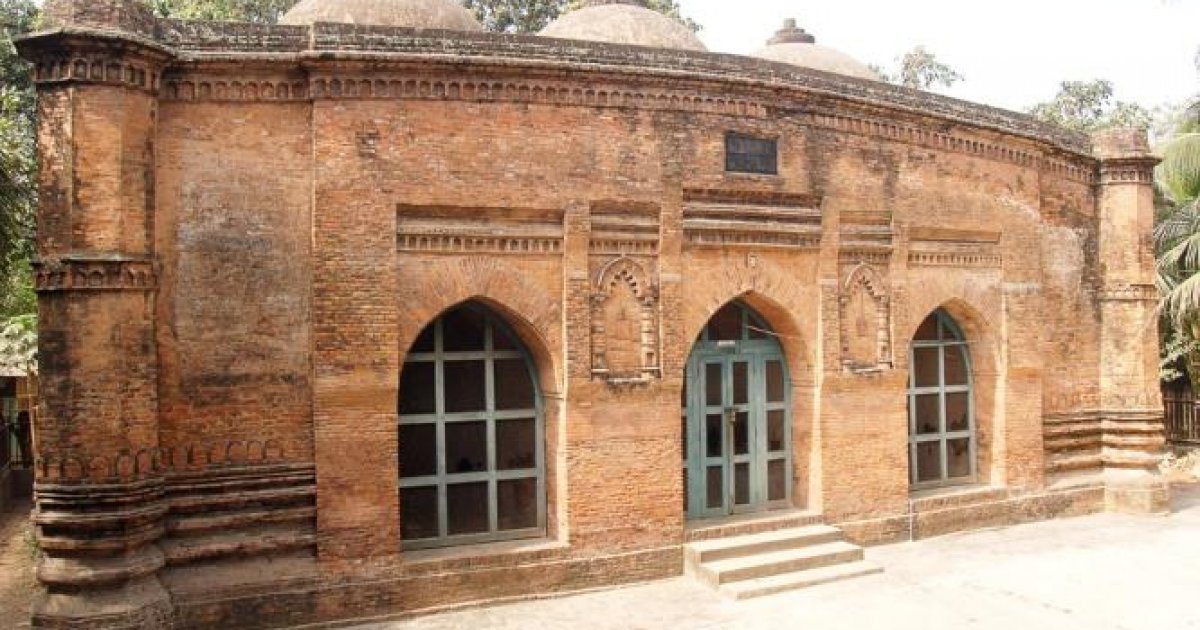
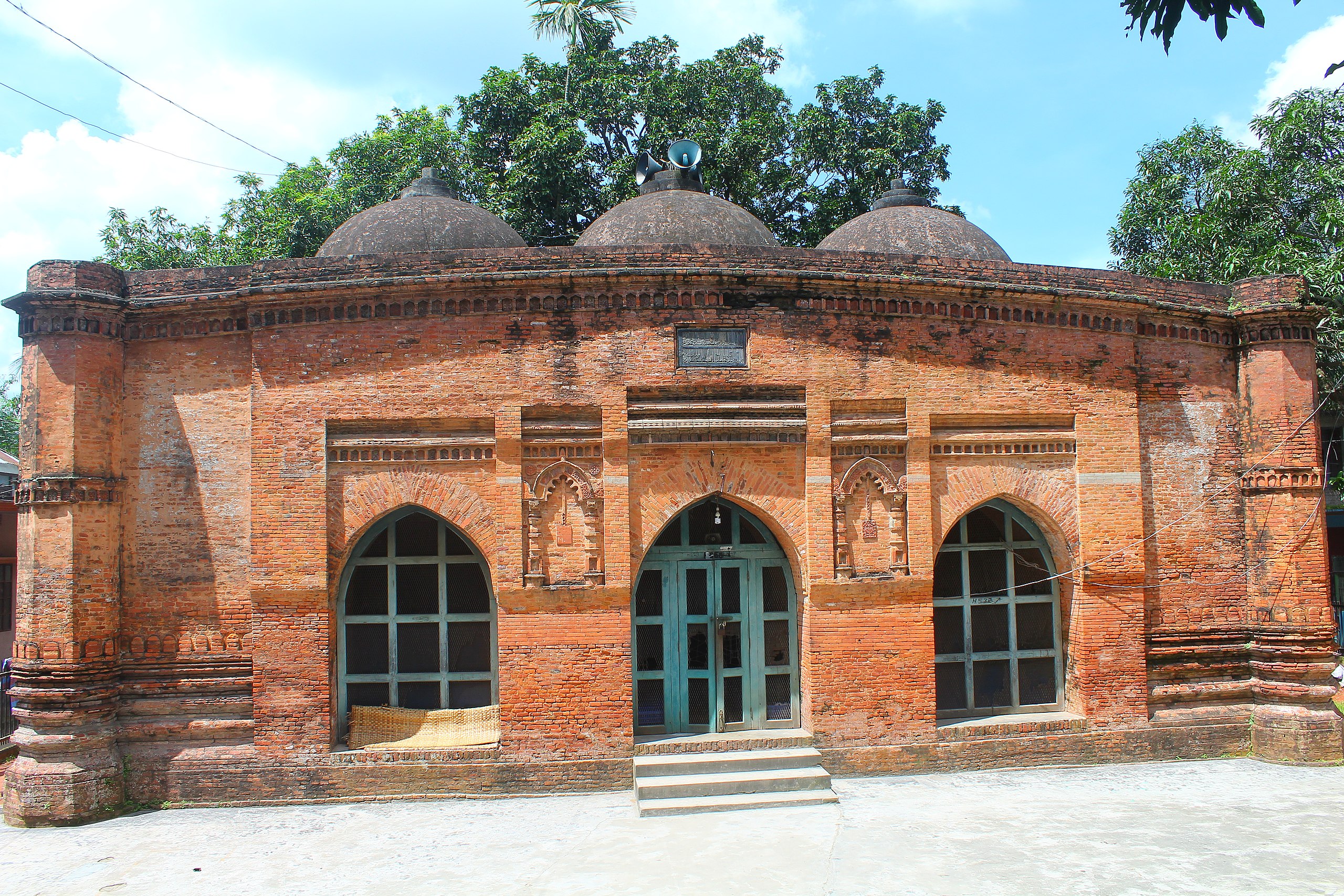
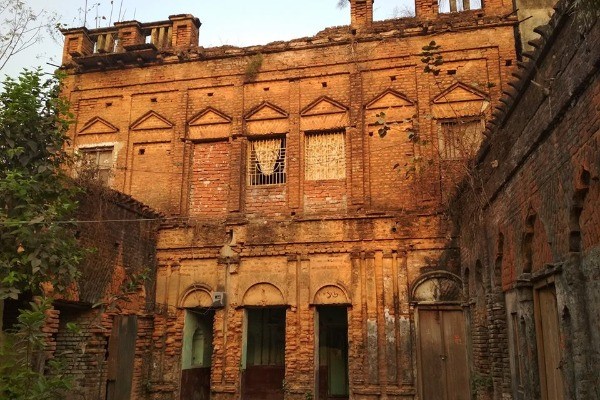
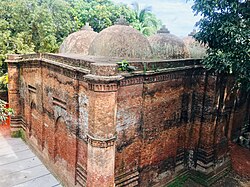
Built in 1483 A.D. by Malik Kafur during the reign of Sultan Jalaluddin Fateh Shah, Baba Adam Mosque stands as a protected Islamic heritage monument in Rampal, Munshiganj, Bangladesh.
Its six elegant domes, ornate terracotta ornamentation, and proximity to the shrine of the revered Sufi saint Baba Adam Shahid make this mosque one of the finest examples of Bengal Sultanate architecture.
Built during the Bengal Sultanate era, this mosque stands as a testament to the grandeur of Islamic architecture and cultural achievement of the period.
Malik Kafur's Legacy
Commissioned by Malik Kafur, a notable figure in the court of Sultan Jalaluddin Fateh Shah, the mosque reflects the patron's devotion to faith and art.
Protected Monument
Recognized as a nationally protected archaeological site, the mosque is preserved for its outstanding historical and architectural significance.
Architectural Distinction
Six graceful domes, intricate terracotta ornamentation, and masterful brickwork define this mosque's unique architectural identity.
The mosque measures approximately 42 feet by 63 feet, divided into six bays by two rows of stone columns. Each bay is crowned with a dome, creating a harmonious rhythm of curved forms. The exterior walls are adorned with exquisite terracotta panels depicting floral motifs, geometric patterns, and calligraphic inscriptions.
The shrine of the revered Sufi saint Baba Adam Shahid, located adjacent to the mosque, transforms this site into a place of spiritual pilgrimage.
The Sufi tradition in Bengal played a pivotal role in the spread of Islam across the region. Baba Adam Shahid is believed to have been a prominent Sufi figure whose spiritual legacy continues to draw devotees and seekers from across Bangladesh and beyond.
Rampal, Munshiganj District, ~30 km south of Dhaka
Visiting Hours
Sunrise to Sunset, Open Daily
Best Season
October – February (Cool & Dry)
Management
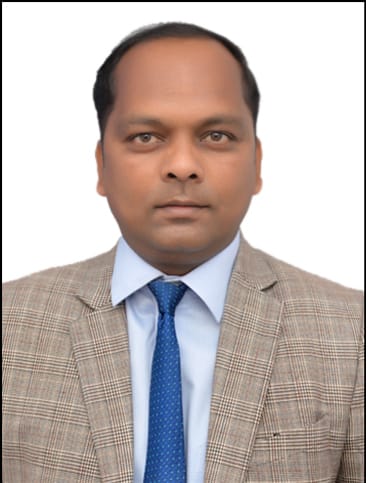
Digant Sharma
Cultural and Heritage Ambassador
View Profile
Rahul Laxman Patil
Regional Youth Engagement & Cultural Affairs Strategist
View Profile
Voices of Heritage
"Baba Adam Mosque is one of the most beautiful examples of Islamic architecture in Bengal."
— Heritage Researcher
"The finesse of the terracotta work is truly unparalleled."
— Architectural Historian
Digant Sharma
Entrepreneur · Social Architect · Nation-Building Strategist
Founder, Torus Group · Architect, SAKSHAM Mission · Co-Founder, Bangladesh Cultural Heritage Trust
Digant Sharma is an Indian entrepreneur whose two-decade career spans technology, agriculture, financial inclusion, digital governance, legal reform, cultural heritage, and large-scale CSR. As Founder, Chairman, or President of more than thirty organisations under the Torus Group, he has built an integrated ecosystem that has reached over 100,000 tribal and Banjara farmers in Maharashtra, mobilised multi-crore CSR commitments across six initiative streams, and conceptualised SAKSHAM — Sampoorna Aay Kar Suvidha Mission — a sovereign-scale national programme to formalise India's informal economy by 2029. Detailed information at digantsharma.com.
FLAGSHIP NATIONAL INITIATIVES
SAKSHAM Mission: Architect of India's Sampoorna Aay Kar Suvidha Mission — formalising 85 crore citizens and 40 crore enterprises into the ITR ecosystem by 2029, supporting India's USD 15 trillion economy goal.
Torus Innotech: 83,000 farmers across 140,000 hectares in Nanded district (Kinwat, Mahur, Parbhani), Maharashtra, with cultivation of cotton, chickpea, toor dal, turmeric and other key crops.
Undertrial Welfare Association (UTWA): Founder & President — national movement providing legal aid, NHRC coordination, counselling, rehabilitation, and digital case tracking for undertrials, with multiple centres at major prisons across India.
GoIPress.com: AI-powered news engine integrating 8,000+ Government of India websites — co-founded with Mr Sandeep Bali, launched 2025.
Buddhist Circuit & Ayodhya Ram Leela: Director of Finance & CSR for the Heartfulness Trilateral Buddhist Circuit Expedition (involving the Armed Forces of India, Nepal and Sri Lanka) and Director of Sponsorship & CSR for the inaugural Shree Ram Leela in Ayodhya Dhaam.
THE TORUS GROUP — 30+ ENTITIES ACROSS SEVEN DOMAINS
Agriculture & Rural: Torus Innotech Pvt Ltd · Torus Supply Chain Pvt Ltd · Torus Social Foundation · Painganga Foundation · KrishiGyaan · AgriWorldNews · StopFarmersSuicide · GauMataAwards
Dharma, Culture & Wellness: DharmaDaan · 24Tirthankaras · Kalki Army Foundation · Sobhagya Yog Sadhna Pvt Ltd (Mumbai & Stuttgart) · Hypnotherapy Pvt Ltd · VeerSurvivors
Media & Communications: Creaa Think Designs India Pvt Ltd (17-year design firm) · Arvi Media House Pvt Ltd · Lash Entertainment Pvt Ltd
Real Estate, Mobility & Hospitality: BuilderBuyerBroker · GaadiFixKar · HotelBusinessNetwork
AWARDS & RECOGNITIONS
Industry Service Award (December 2026): conferred by Shri Gulab Chand Kataria, Hon'ble Governor of Punjab
Excellence in Agriculture Award (2024): conferred by Shri Eknath Shinde, then Hon'ble Chief Minister of Maharashtra, for transforming the lives of over 100,000 Adivasi and Banjara farmers
Lokshahi Sanman Award (2023): conferred by Shri Devendra Fadnavis, Hon'ble Deputy Chief Minister of Maharashtra, to Torus Innotech leadership for best agricultural work in rural Maharashtra
RELEVANCE TO THE BANGLADESH HERITAGE RELAUNCH PROGRAMME
Mr Sharma's career evidences the five capabilities required for the proposed Bangladesh partnership: (i) CSR delivery at national scale, demonstrated by the 100,000-farmer programme; (ii) multi-faith cultural-heritage experience, demonstrated by the Buddhist Circuit Expedition and the Ayodhya Ram Leela CSR roles; (iii) Government engagement at the State and Central level, demonstrated by SAKSHAM presentations and three Government awards; (iv) cross-border capital mobilisation, demonstrated by the Hypnotherapy 100-country plan, the Sobhagya Yog Sadhna Mumbai-Stuttgart structure, and the Ophi Technologies India-Finland-Switzerland partnership; and (v) digital and technology backbone, demonstrated by GoIPress and Creaa Designs — directly applicable to the proposed twelve-portal digital platform supporting the Bangladesh programme.
Regional Youth Engagement & Cultural Affairs (BIMSTEC)
Track-II Diplomacy Strategist
Specialization: Civilisational Dialogue • Cultural Geopolitics • Indo–BIMSTEC Regional Integration
PROFILE SUMMARY
For the past 18 years, Rahul Laxman Patil has been working in the national interest, promoting social harmony, youth engagement, and regional cooperation across South Asia within the framework of the BIMSTEC region.
Recently, he conceptualized the Tri-Services Lord Buddha Circuit Motorcycle Expedition, spanning seven states of India, aimed at promoting peace, cultural diplomacy, and youth participation, with engagement from institutions including the Ministry of External Affairs, Nalanda University, and other national bodies.
He remains committed to nation-building, social dignity, and the welfare and empowerment of Safai Karamcharis.
He works as a Track-II Diplomacy Strategist contributing to informal diplomatic engagement platforms that support regional integration, people-to-people connectivity, and cultural-geopolitical understanding among BIMSTEC member states.
AREAS OF EXPERTISE
Track-II Diplomacy & Informal Strategic Dialogue
Civilisational & Cultural Connectivity
Youth Engagement & Regional Capacity Building
Cultural Geopolitics in South & Southeast Asia
Indo–BIMSTEC Regional Integration Frameworks
FOCUS DOMAIN
Strengthening collaborative frameworks between youth networks, cultural institutions, and strategic dialogue platforms across BIMSTEC nations, with emphasis on shared heritage, civilisational continuity, and regional cooperation.
MAJOR ACHIEVEMENT / FLAGSHIP INITIATIVE
Lead contributor in the conceptualisation and coordination of the Tri-Nation Tri-Services Lord Buddha Circuit Motorcycle Expedition (BIMSTEC Region), a transnational initiative promoting civilisational connectivity, youth engagement, and defence-culture diplomacy across India, Nepal, Sri Lanka, and the wider Indo–BIMSTEC space.
Associated with regional cultural cooperation initiatives focused on heritage revitalisation and cross-border civilisational dialogue, including Indo–Bangladesh cultural heritage collaboration frameworks.
KEY THEMATIC VISION
Advancing civilisational dialogue, cultural understanding, and strategic regional integration across the Indo–BIMSTEC space through Track-II diplomacy and youth engagement initiatives.